
Two Forms of Service: Krista’s Journey as a Military Spouse in Nursing
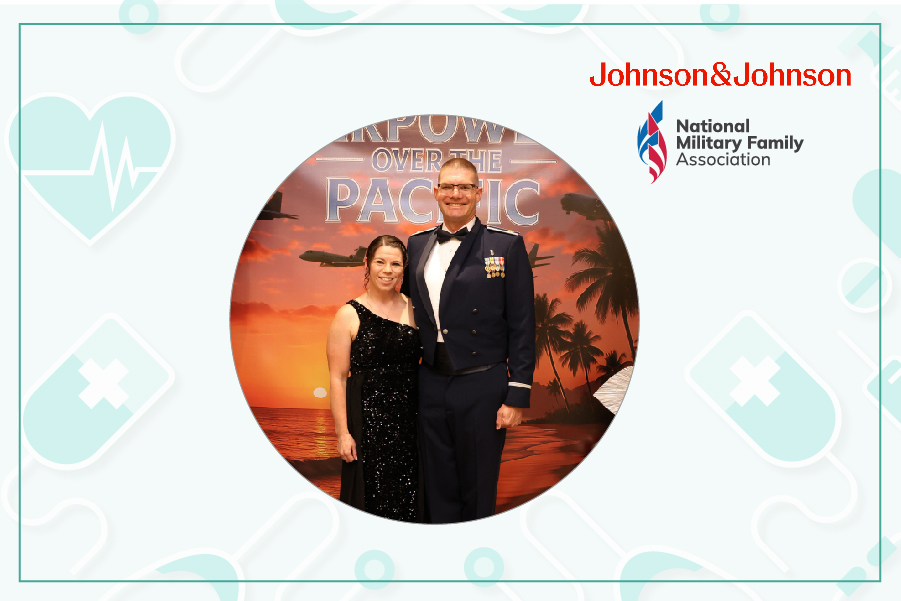
At 5:30 a.m. in Hawaii, before her children stir, Krista and I connect by phone, our conversation traveling across coffee cups and time zones.
The early hour feels familiar to Krista. So does the brief stillness before the day begins. In another season of her career, her days revolved around the intensity of a busy trauma unit. Today, they begin at the elementary school where she works as a skilled nursing provider; the same school her children attend.
If you had asked her when she graduated from nursing school whether she would ever work in a school setting, she would have laughed.
“I always wanted emergency trauma,” she says, and that is exactly where she began, working in a large trauma facility in St. Louis where the pace was relentless and the stakes were high. She was drawn to the controlled chaos, to the adrenaline that pulsed through long shifts, and to the intensity that required total focus and steady hands. Emergency services were woven into the fabric of her upbringing. She grew up in a rural community outside St. Louis, where volunteer fire calls would come in at two in the morning, and answering them was simply part of life. As a child, she rode in the back of ambulances with her firefighter medic father and nurse mother, sometimes falling asleep in fire trucks before being taken to school the next morning, absorbing from an early age what it meant to show up when others needed help most.
But when her husband commissioned into the Air Force, she quickly realized that maintaining a nursing career alongside military life would require far more adaptation than she anticipated.
“I don’t think I was surprised,” she reflects. “I was naive.”
She knew military service would involve long hours. What she didn’t fully understand yet were the additional layers: physical training requirements, military education courses, exercises, commander’s calls, and the possibility of deployment on short notice. A schedule that looked manageable on paper expanded into something far more consuming in practice.
Before children, they made it work. But once she became pregnant with their first child, the logistics became daunting. A typical twelve-hour hospital shift was rarely just twelve hours. With commute time, patient handoffs, and unexpected emergencies, it could stretch to fourteen or more. Finding childcare that could accommodate overnight shifts or unpredictable extensions proved nearly impossible, especially while living a thousand miles from family support.
When her husband deployed with less than a week’s notice, leaving her home with a six-month-old and no clear return date, the fragility of their plan became undeniable.
Eventually, she stepped away from the workforce.
“I always said I would work until I had the baby,” she explains. Her pregnancy was more difficult than expected, and as uncertainty around childcare and deployment cycles grew, leaving felt inevitable.
The intention was never permanent.
At their next duty station, now with three children, she attempted to re-enter nursing. What she encountered instead were structural barriers that many military spouse professionals quietly navigate.
Despite holding a compact nursing license, she encountered complications when transferring to Texas. At the time, her existing license would only be recognized temporarily unless she obtained a separate Texas state credential, a process that was both costly and time-consuming, with no reimbursement available through the military. Determined to return to practice, she applied for PRN positions, meaning “as needed” roles designed to offer flexible, part-time scheduling rather than full-time hours. Yet during interviews, she was told the facility required full-time availability after all. That was something she simply could not promise without knowing her husband’s evolving military schedule, which could shift with little notice.
Shortly afterward, her husband deployed again, this time for eight months.
Attempts to maintain professional continuity repeatedly collided with the realities of military service. Even when childcare was secured, the unspoken understanding remained: if a child was sick, she would be the one to leave work. His service commitment came first. Over time, résumé gaps widened. A series of short-term roles reflected frequent moves, not instability; though, paper mobility can easily be mistaken for inconsistency. In a hiring process that prizes uninterrupted tenure, military spouses are often filtered out before they ever have the chance to explain.
The turning point came with graduate school.
When military orders brought their family closer to extended relatives, Krista recognized a rare and narrow window of possibility. In 2019, she enrolled in a Master of Science in Nursing program, determined to pursue the degree she had long placed on hold.
Within a year, however, the COVID-19 pandemic upended both the healthcare system and the educational landscape, and she found herself navigating graduate coursework while simultaneously supporting four children through virtual learning and managing repeated childcare disruptions due to coronavirus exposure. As if that were not enough, her husband received just forty-eight hours’ notice that he would deploy again, this time in support of pandemic response efforts, leaving her to carry the weight of school, parenting, and uncertainty all at once.
“It feels like a fever dream,” she says now.
But, she finished.
Earning her master’s degree did more than expand her credentials. It reinforced that her professional identity had not disappeared.
There were many moments during those years outside of the workforce when she struggled to answer a simple question: What do you do?
“It felt fraudulent to say I was a nurse,” she admits. Even with an active license, time away from practice made her feel disconnected from a role that had once defined her.
Re-entering the workforce, even in smaller ways, restored something important.
Today, she works as a skilled nursing provider in her children’s elementary school, a position she describes as a “unicorn.” The hours align with her children’s schedules, and childcare is no longer a daily concern. The role allows her to continue practicing nursing while maintaining the flexibility that military life demands.
Fifteen years ago, she would not have predicted this path, but the breadth of experiences she has accumulated, from the intensity of trauma nursing to the rhythm of academia and the intimacy of school-based care, has broadened her skill set and quietly strengthened her identity as a nurse.
Military life, she says, forced her to consider opportunities she might otherwise have overlooked.
Recent policy changes have helped. Through military spouse licensure provisions enacted in the past few years, she was able to obtain a Hawaii nursing license without navigating the full traditional transfer process. That kind of flexibility, she notes, makes a meaningful difference.
Still, broader challenges remain for military families navigating shift work and unpredictable schedules within childcare systems that are built around traditional business hours. When military spouse nurses work evenings, overnights, or extended shifts, they are often doing so in support of communities that depend on them, yet the burden of making that work falls squarely on their households. Expanding access to affordable childcare with extended hours would make it more sustainable for military spouse nurses to continue answering their professional and family callings at once.
When highly trained nurses step away from the workforce because of structural incompatibility rather than lack of commitment, communities lose valuable expertise.
Yet despite the challenges, Krista’s perspective doesn’t waver.
“I would do it completely over again,” she says.
She speaks with pride about watching her children grow up immersed in Air Force values like service before self. They have witnessed their father deploy and return. They have learned resilience through continuous transition. And she, too, has learned that nursing is not confined to one setting or one season of life.
Her advice to other military spouse nurses is simple: do not lose your identity.
“You worked hard for that degree and that license,” she says. “Even if you’re not actively practicing right now, it will still be there.”
In a profession defined by adaptability and compassion, military spouse nurses embody navigating duty stations, deployments, and unexpected detours while continuing to serve wherever and however they are able.
For Krista, like many military spouses, nursing and military life have not always moved in complete harmony, but over time they have shaped one another.
In the quiet hours before sunrise, before the rest of her household wakes, she tells me the journey has been worth it.
When nursing and military life meet, the journey is rarely simple, but it is deeply meaningful. If you are navigating both, we encourage you to share your story with us today.
Together We’re Stronger®
By: Olivia Brinsfield, Content Manager