
More Than a Spouse: Supporting Mental Health Through Connection and Community
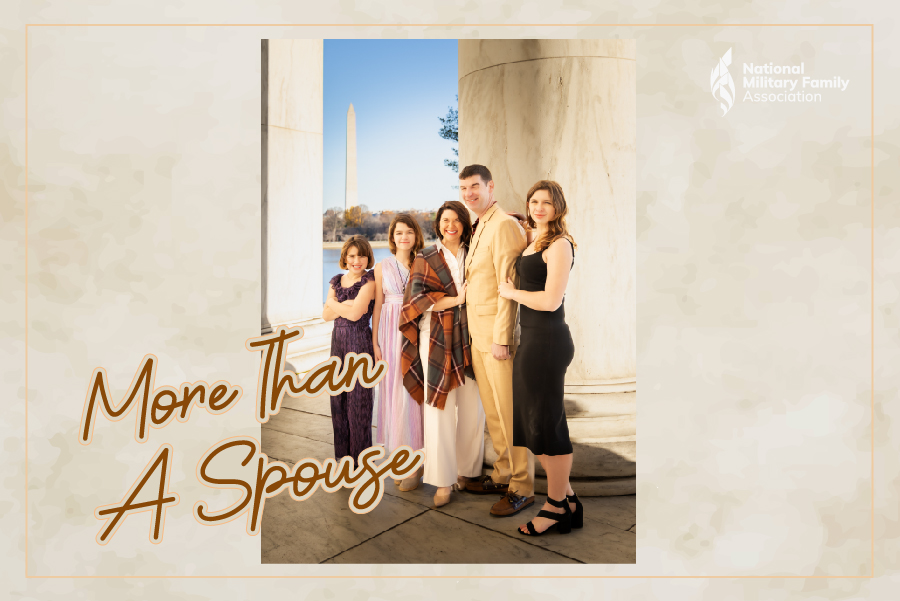
For more than two decades, Crystal Bettenhausen-Bubulka has built a life alongside military service, following orders across oceans, rebuilding community from scratch, raising children through constant transition, and reconstructing her professional identity more times than she can count.
Like so many military spouses, she has learned how to adapt quickly while anchoring deeply, how to keep moving forward even when life shifts again just as it begins to feel settled.
But Crystal’s story is not only about personal grit.
It is about what happens when a highly educated, deeply committed professional repeatedly collides with systems that were never designed with military spouses in mind. It is about what one military spouse built when she realized the barriers she kept encountering were not isolated frustrations, but structural problems. And it is about the conviction that belonging, mental health, and meaningful work are not separate issues, but deeply connected ones.
Raised on a third-generation farm in North Dakota, Crystal entered military life with little familiarity with its culture, cadence, or hidden rules. She met her husband when he was in ROTC, and what followed was a world that felt entirely foreign. Moves, separations, deployments, and the practical realities of military family life all arrived with a steep learning curve.
“I was so green,” she says.
What helped her navigate those early years was other military spouses. Fellow spouses who took her aside shared what they had learned and helped her understand a life she had never imagined for herself. That early experience left a lasting impression that mentorship was a crucial component of military life.
At the time, Crystal had a clear professional vision for herself. She was working in marketing and imagined a fairly traditional career path; one built upon consistency, long-term growth, and steadily expanding responsibility. Military life reshaped that plan; not by diminishing her ambition, but by requiring her to pivot repeatedly as duty stations changed and opportunities shifted.
Instead of a single upward trajectory, her career became a series of recalibrations. New cities, new credentials, and new networks built from scratch.
Over time, that path led her into social work, where she found a discipline expansive enough to hold the questions military life kept forcing her to ask: What exactly do people need to thrive? What happens when systems fail them? And how do you care for individuals while also challenging the environments that shape their lives?
Even then, the road was not linear. Crystal moved through different roles, pursued advanced education, volunteered extensively, and kept finding ways to move forward in environments that often made career continuity difficult. She learned to see volunteer opportunities not as a step backward, but as a bridge to build relationships, gain experience, and stay connected to purpose when formal employment pathways were blocked.
That mindset would prove critical, because one obstacle kept appearing no matter how qualified she became: licensure portability.
For professionals in mental health and related fields, every state has its own rules. Small administrative differences can create major professional consequences. A license may not transfer cleanly; clinical hours may expire, and a delay in one state can undo momentum built in another. Crystal repeatedly found herself hearing different versions of the exact same message during interviews and professional conversations: “You are absolutely perfect, but you don’t have this license.”
For military spouses in regulated professions, the challenge is not whether they are capable. It is whether the system recognizes mobility as a reality worth accommodating. When it does not, spouses lose income, lose professional momentum, and lose years of progress. Communities lose experienced and compassionate providers. Military families lose stability. And in fields like mental health, the consequences ripple even further.
Crystal has lived those consequences firsthand. She has watched clinical hours expire during relocations. She has seen military spouses enroll in programs that do not translate across state lines. She has navigated the financial and logistical strain of maintaining multiple licenses and keeping pace with different legal and ethical standards in different states. She has seen just how quickly people tune out when a problem becomes too technical to explain easily.
“It’s so complex that people stop listening,” she says.
Instead of accepting that complexity as inevitable, Crystal chose to study it, challenge it, and build something better.
She founded Strength in Service in response to what she had experienced personally and professionally: loneliness, confusion, licensing barriers, and a lack of tailored support for military spouse mental health providers trying to build sustainable careers. The organization is rooted in a simple but powerful understanding that isolation is often the result of systems that make connection, stability, and continuity harder than they should be.
“At the heart of it, if we can solve isolation and loneliness, it changes everything,” Crystal says.
That belief drives her work. Through Strength in Service, she and her team provide mental health support for military-connected individuals while also guiding military spouses pursuing careers in social work through mentorship, supervision, educational resources, and pathways for professional growth.
Seventy-five percent of her staff are active duty military spouses.
“We’re creating internships. Associates. Licensed clinical social workers,” she says. “Then we supervise other military spouses. We just keep branching out.”
Her vision is both deeply personal and profoundly strategic. She knows that building a licensed mental health workforce takes time. It takes education, supervision, infrastructure, and sustained investment. It also takes people who understand military life from the inside. If military families are going to receive support from providers who truly understand their realities, that pipeline must be built intentionally.
Crystal is passionate not only about direct service but also about systems change. She advocates for clearer communication from licensing boards, stronger protections for military spouse professionals, and greater inclusion of military spouse providers in policy conversations that affect their work. She believes communities function better when people feel like they belong, and that belonging itself should be treated as a workforce issue, a readiness issue, and a public health issue.
“You’ve got to make people feel like they belong,” she says. “Otherwise, we’re just speaking in silos.”
That belief has become the through line of her career. What began as one military spouse trying to find her footing in an unfamiliar world has grown into something much larger: a mission to ensure others do not have to navigate the same barriers alone.
Through Strength in Service, Crystal is helping build the kind of support system she once searched for herself, one that connects military spouse professionals, expands access to mental health care, and strengthens the military community from within.
Her story is a powerful reminder of what the More Than a Spouse campaign was created to highlight: the leadership, expertise, and impact military spouses bring to their professions and their communities every day.
If you are a military spouse with a story to share, we invite you to submit it below. Every story helps highlight the many ways military spouses lead, build careers, and strengthen the communities around them.
Together We’re Stronger ®
By: Olivia Brinsfield, Content Manager