Facing The Unknown: Resources for Displaced Military Families
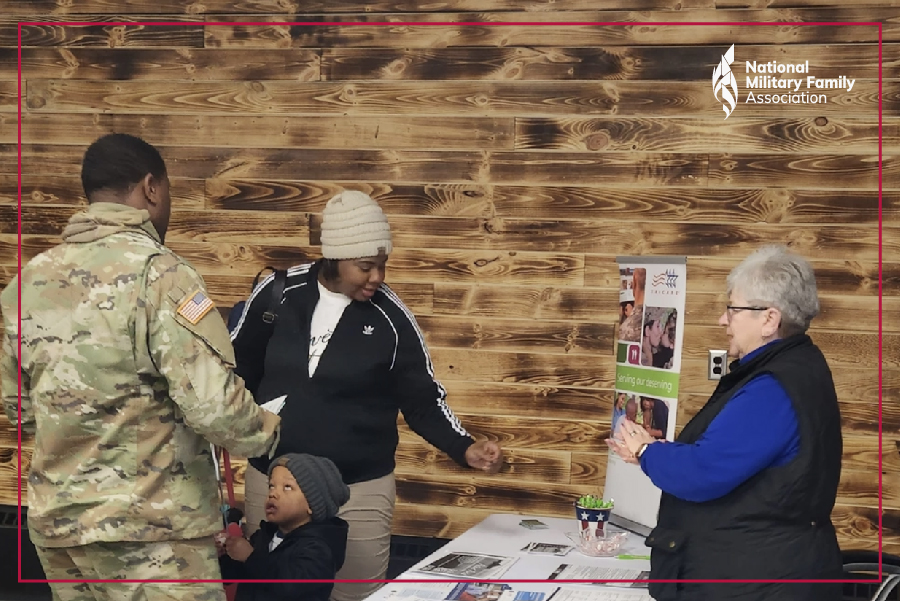
In the span of days, thousands of military families saw their lives shift with little warning.
Following escalating tensions, the recent rapid evacuation of service members and their families in the Middle East has left many juggling uncertainty, transition, and unanswered questions. Families were forced to depart quickly, arriving stateside in places like Norfolk with little more than they could carry.
Separated from their homes, belongings, and routines that anchor their daily life, uncertainty remains about housing, schooling, healthcare access, and what comes next.
While every relocation in military life comes with challenges, unplanned displacement due to global conflict carries a whole other level of complexity. NMFA is monitoring the situation in the Middle East with a watchful eye. In the meantime, here are some key resources and information to help military families currently facing displacement.
Healthcare
Access to care remains a priority, even during periods of uncertainty. For displaced military families, it’s important to know that your healthcare coverage will continue, and support is available to help you navigate any changes.
- For those displaced, TRICARE coverage continues, and you don’t need to re-enroll right away.
- Remember that displacement is a Qualifying Life Event (QLE), which means you have options. If your family plans to remain stateside permanently, you’ll need to update your address in DEERS via milConnect to register your QLE. If your move is temporary, no DEERS update is needed, and ISOS will continue to coordinate your care.
- For any care needed, call the 24/7 MHS Nurse Advice Line at 800-TRICARE (874-2273) and choose option 1. For overseas phone numbers, you’ll want to visit https://www.mhsnurseadviceline.com/
- For more detailed guidance and updates, families can visit TRICARE’s dedicated resource page for displaced beneficiaries.
Education
For military-connected students, disruption to the school year can be one of the most immediate and stressful impacts of displacement. Whether your child is in elementary school or preparing for college entrance exams, there are resources in place to help maintain continuity.
- School Liaison Officers are a critical first point of contact and can help families navigate enrollment, transfers, and local school systems. Families are encouraged to connect with a School Liaison Officer as soon as possible upon relocation.
- For students in the Gulf region who were scheduled to take Advanced Placement exams or the SAT, the Department of Defense Education Activity and the State Department have coordinated directly with the College Board to provide updated guidance and alternative options. Families can access the following resources
- AP Exam Updates & Q&A webinar recording
- AP and SAT Gulf region microsite
- Find SAT test centers
- Find schools that offer AP courses
- Steps for students to transfer AP exams
- Information for Gulf region students on the May and June SAT
Additional Resources and Support
Beyond healthcare and education, financial assistance and community-based support can help stabilize families during this challenging time. These organizations can offer support tailored to your situation, including emergency funding, loans, and/or grants.
- Military OneSource remains a central hub for information, non-medical counseling, and relocation support. Families can access a wide range of services, including financial counseling and specialty consultations.
- Service-specific relief societies are also playing a critical role in providing emergency financial assistance:
Moving Forward, Together
The ripple effects of global conflict are real. Moments like this are felt across the entire military family community, even those not directly impacted by the recent evacuation. The families who were displaced likely feel overwhelmed and stressed as they try to navigate what comes next, all while processing what they just had to leave behind.
In this moment of uncertainty, one thing we all do know for certain is that one of the greatest strengths our military community has is each other. In times like this, leaning on your network of fellow military families, local support organizations, or trusted community spaces can make all the difference. NMFA is honored to be part of that support network.
If your family has been affected by recent evacuations, we want to hear from you. So, tell us: What support would be most helpful to you right now? What specific challenges are you facing that we should raise awareness of or advocate for in this moment?
Your voice helps shape the support systems and policies that impact military families just like yours.
Together, We’re Stronger®