
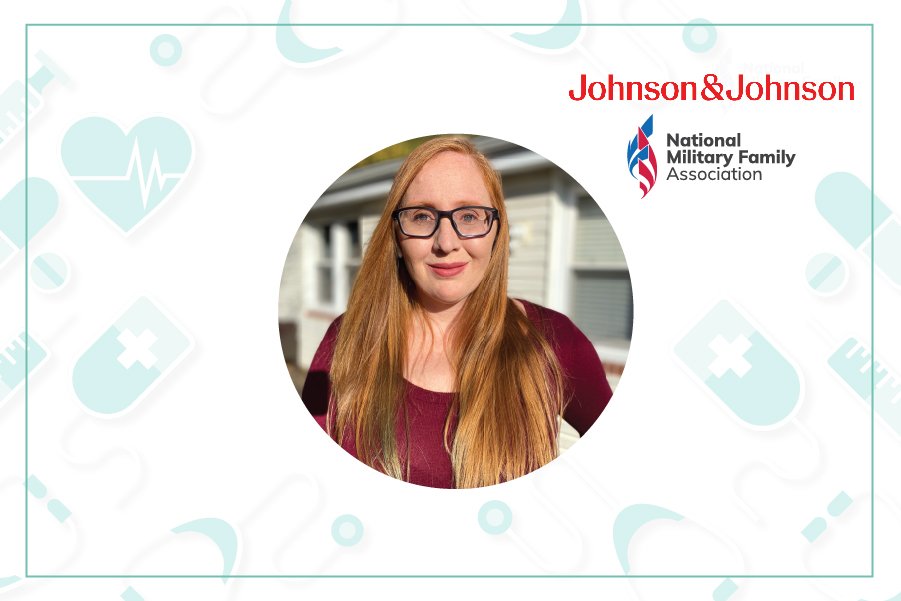
Aislinn’s Story: Nursing, Service, and Building a Career in Motion
For many military spouses, choosing a career means weighing passion and purpose alongside inevitable moves, the need for portability, and the reality of repeatedly rebuilding their professional lives.
For Aislinn Woody, a Coast Guard spouse, military veteran, and nurse, that decision was deeply intentional.
After serving on active duty herself, Aislinn was navigating her own transition out of the military when she began charting her next path.
“I knew I needed a career that would travel well,” she shared. “But I also wanted something that let me continue serving my community.”
Nursing offered both. It provided stability, a sense of purpose, and a professional identity that could move with her family across duty stations. Like so many military spouse nurses, her journey has been shaped by a constant balancing act between career progression and military life.
Over 20 years of marriage, six moves, and more than two decades of military service alongside her spouse, Aislinn has built a career not in a straight line, but in seasons.
“There are certainly struggles,” she explained. “But nursing has so many paths to choose from that I’ve always been able to find one that met our needs for the seasons of life our marriage and the military have shown us.”
That adaptability is both a strength and a necessity. When the COVID-19 pandemic disrupted daily life, Aislinn’s husband was out at sea, and their young child shifted to virtual school overnight. With limited local support, she made a pivotal decision. She stepped away from bedside nursing and pursued a doctoral degree. This move allowed her to continue contributing financially through her graduate stipend while remaining present for her family.
That kind of flexibility is common among military spouse nurses; a quiet recalibration that happens behind the scenes, often invisible to employers and policymakers.
Frequent relocations create a cycle that many spouses know all too well. Just as a nurse gains experience, builds trust within a team, and approaches opportunities for advancement, it is time to move again.
“Even with a focused and forward-thinking mindset, frequent moves mean two steps forward, one step back,” Aislinn said.
Beyond lost seniority and disrupted career trajectories, there are additional barriers that are harder to quantify but deeply felt. Hiring bias remains a reality. Military spouses are often perceived as temporary employees, despite the value and experience they bring.
“I had one potential employer tell me she was ‘tired of wasting time on Coast Guard wives,’” she recalled.
At the same time, the demands of military life can create challenges that employers may misunderstand. When service members are deployed or unable to take leave, childcare responsibilities often fall entirely on the spouse. Without extended family nearby or consistent community support, even minor disruptions, like a child getting sick, can impact a nurse’s ability to work.
“In addition to frequent moves, we can look like unreliable employees,” Aislinn explained, “because our spouse may be unable to take off and we don’t have the community support someone who is local might have.”
And yet, military spouse nurses continue to show up.
They bring with them a depth of experience that is difficult to replicate. Exposure to healthcare systems across states and regions allows them to adapt quickly, learn new protocols, and contribute meaningfully from day one.
“Even a highly specialized nurse will have seen units all over the country,” Aislinn said. “We’re able to learn and grow with all of those experiences.”
Indeed, her own journey does reflect that growth. In December 2025, after navigating multiple moves during her program, she earned her doctoral degree in nursing. It was an achievement made possible not only through determination, but through institutional support from her university and academic mentors that recognized the realities of military life. For military spouses, being understood and supported in this way can make all the difference in reaching the finish line.
Still, systemic challenges remain. One of the most significant barriers for military spouse nurses is licensure. The lack of universal participation in the Nurse Licensure Compact continues to create delays in licensure and limit employment opportunities after each move.
“All states need to participate,” Aislinn emphasized. “This would make military spouses more readily employable and significantly decrease our time unemployed after moves.”
For military spouse nurses, the issue is not a lack of commitment or capability. It is a system that has yet to fully align with the realities of military life.
And yet, within that system, there are bright spots. Aislinn recalls her time at Tampa General Hospital as an example of what meaningful support can look like. During a government shutdown when Coast Guard families were not receiving pay, the hospital proactively identified affected employees and provided financial assistance.
“They said, ‘We can’t expect you to take care of our families when you’re worried about taking care of yours.’”
Beyond financial support, the hospital offered practical solutions like on-site childcare with hours that matched nursing shifts and sick-child care services, creating a structure that allowed military spouse nurses to remain in the workforce.
These kinds of supports can be transformative, shaping whether military spouse nurses are able to remain in the workforce and continue building their careers.
Across the country, military spouse nurses are strengthening healthcare systems, caring for their communities, and helping fill critical workforce gaps in places that need them most. Their stories reflect persistence, adaptability, and a deep commitment to care that endures through constant change. With the right policies and support systems in place, their impact can extend even further, strengthening both the military families behind the profession and the broader healthcare workforce they serve.
If you’re a military spouse who has built a career in nursing, we invite you to share your story with us and help illuminate the experiences that shape this community.
Together We’re Stronger ®
By: Olivia Brinsfield, Content Manager