

The Strength to Begin Again: Jacqueline’s Story as a Military Spouse Nurse
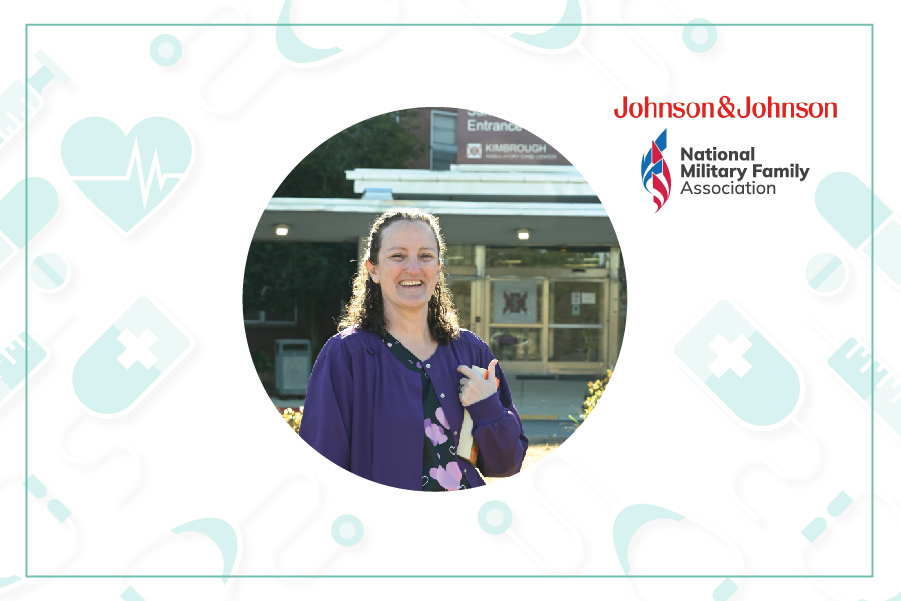
For many military spouse nurses, building a career often means having to rebuild it repeatedly. Just as professional momentum begins to grow, another PCS move can bring new licensing requirements, another job search, and another round of proving hard-earned experience in an unfamiliar workplace. For Jacqueline Moore, those challenges have shaped nearly three decades of military family life and a nursing career defined by resilience, adaptability, and determination.
After 28 years as an Army spouse, 14 PCS moves, and years spent balancing nursing, parenthood, and military life, Jacqueline understands firsthand what it means to continue moving forward while constantly being asked to start over.
Finding a Path Into Nursing
Jacqueline did not begin her nursing career until several years into military life. After the birth of her second child and five years as a military spouse, she decided to return to school and pursue nursing after realizing that the responsibilities she carried as a phlebotomist were not reflected in her compensation or long-term career opportunities.
What followed were years of balancing coursework, deployments, parenting, and the realities of military mobility. While many nursing careers are built within a single healthcare system or community, Jacqueline’s professional journey unfolded across duty stations, relocations, and repeated professional transitions.
One accomplishment still rises above the rest for Jacqueline: earning her nursing degree while raising two young children during her spouse’s deployment. Balancing the demands of military family life alongside the intensity of nursing school required extraordinary discipline, endurance, and sacrifice, making it one of the professional achievements she remains most proud of today.
The Professional Costs of Mobility
Like many military spouses working in healthcare, Jacqueline’s professional path has been shaped as much by relocation as by clinical experience. Before many states joined nursing licensure compacts, every move often meant securing an entirely new license, paying additional fees, and navigating yet another administrative hurdle before she could return to work.
“I have had to get 7 different state licenses because at that time the states were not in the compact,” Jacqueline explained. “It cost me a few hundred dollars every move.”
The barriers extended beyond licensure. Jacqueline shared that transferring college credits between institutions proved difficult and expensive, ultimately limiting opportunities to continue advancing academically despite years of professional experience in the field.
The Invisible Labor Behind the Profession
For military spouse nurses, the challenges often extend far beyond resumes and credentials alone. Behind each transition are families navigating deployments, childcare, changing schools, and the uncertainty that accompanies preparing for another move. Professional sacrifices rarely happen in isolation. Career decisions are often made alongside solo parenting during deployments, disrupted support systems, and the emotional demands of helping entire families repeatedly adjust to upheaval.
Jacqueline explained that one of the most difficult aspects of balancing career growth with military family life was managing the constant uncertainty surrounding upcoming PCS moves. Re-entering unfamiliar workplaces also brought frustration, particularly when colleagues underestimated her experience and capabilities simply because she was new to the organization.
That continual process of re-establishing professional credibility is one many military spouses understand deeply. Yet Jacqueline believes those experiences also cultivate unique strengths within military spouse healthcare professionals.
She emphasized that one of the military community’s greatest strengths is its diversity of experiences and perspectives, along with the depth of knowledge gained through navigating different roles, communities, and challenges throughout military life.
Years of adapting to unfamiliar healthcare systems, licensing requirements, and new communities often produce professionals who are exceptionally resilient, highly adaptable under pressure, and skilled at integrating quickly into new environments, strengths that are invaluable in healthcare settings yet frequently overlooked in traditional hiring practices.
Continuing Forward
After nearly three decades of military life, Jacqueline speaks about balancing career ambitions, caregiving, and constant transition with both honesty and hard-earned perspective. Her story is not defined solely by perseverance, but by an enduring commitment to continue building a meaningful career and caring for others despite the instability that so often accompanies military life.
Today, Jacqueline hopes institutions and policymakers develop a deeper understanding of the structural barriers military spouses face while trying to sustain long-term healthcare careers, particularly challenges surrounding licensure, credit transfers, hiring practices, and fair compensation for experienced professionals repeatedly forced to restart professional momentum.
“It should be easier to transfer college credits and be able to access jobs that pay what you deserve with the experience you bring to the field,” Jacqueline reflected.
Looking back on the life she built while navigating military spouse life and nursing simultaneously, Jacqueline knows exactly what she would tell her younger self before the journey began:
“You are in for a wild ride. Fasten your seat belt and keep moving forward.”
Are you a military spouse nurse, or do you know an incredible military spouse nurse whose story should be shared? We would love to hear from you. Share your story, or nominate someone inspiring in your community, here.
Together We’re Stronger ®
By: Olivia Brinsfield, Content Manager
SHARE YOUR STORY
CATEGORIES:
TAGS: