

NMFA and National University’s Sanford Harmony Explore Findings from the 2026 Military Teen Experience Survey
Military teens know what it means to adapt.
They move across the country, start over in new schools, say goodbye to close friends, adjust to deployments, and often take on responsibilities beyond their years. While these experiences shape who they become, they can also make an already complicated season of adolescence even more challenging, a reality that is easy to overlook when military teens are so often described as resilient.
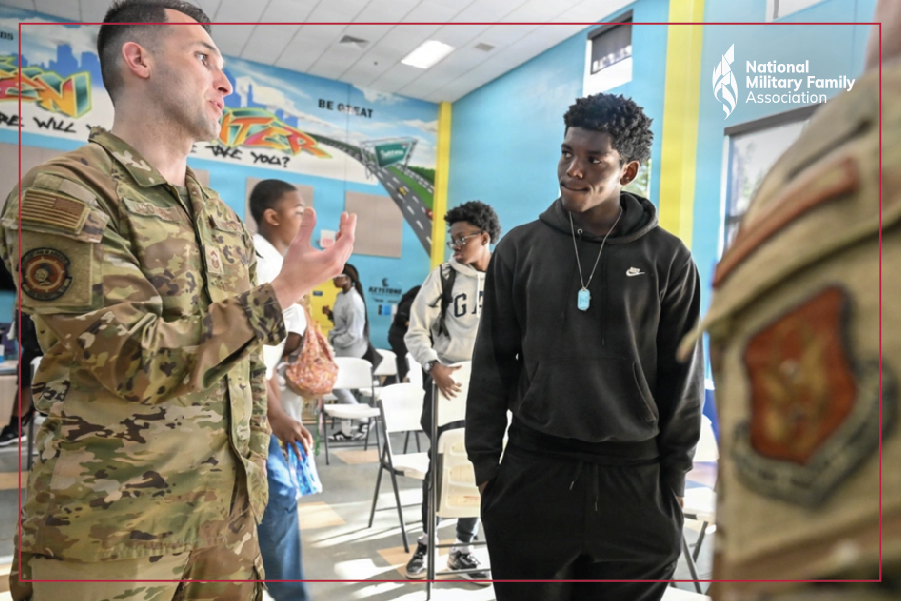
That was the focus of Breakfast & Belonging: Understanding the Military Teen Experience, hosted by the National Military Family Association (NMFA) in partnership with National University’s Sanford Harmony. The event brought together military family advocates, educators, and community leaders to discuss findings from the 2026 Military Teen Experience Survey, which gathered responses from more than 800 military-connected teens and young adults. The conversation also featured an interview between NMFA Chief Executive Officer Besa Pinchotti and 13-year-old military teen Hunter Duttweiler, whose perspective brought many of the survey findings to life.
Throughout the conversation, one message emerged repeatedly: military teens often develop remarkable strengths, but those strengths should never be mistaken for an absence of need. Instead, the conversation focused on recognizing challenges early and creating relationships and systems that help military-connected youth thrive long before they reach a crisis.
The Weight of Repeated Transitions
The average respondent to this year’s survey had experienced five PCS moves, four deployments, and attended four different schools. Each additional move, deployment, and school change was associated with lower mental well-being.
Rather than identifying any one challenge, the findings illustrate the cumulative impact of growing up through repeated cycles of change. Every move can mean leaving behind close friends, adjusting to a new school, rebuilding relationships with teachers and coaches, and finding a sense of belonging all over again.
During her presentation of the findings, Raleigh Duttweiler, NMFA’s Chief Impact Officer, captured that reality simply: “Every time a military kid experiences this, they’re moving and leaving their whole social world behind.”
Military teens often become remarkably good at starting over. That does not mean starting over is easy, or that they leave behind any less each time they do it.
Belonging Is a Protective Factor
The survey reinforced a consistent theme in military teen research: connection matters.
Teens who struggled to make or maintain friendships, or who had fewer friends who made them feel good about themselves, were more likely to report lower mental well-being. Many also said they felt most understood by other military-connected youth who knew what it was like to move repeatedly, leave friends behind, and begin again.
But belonging extends beyond friendships. Research has consistently shown that one trusted adult outside the home can have a lasting influence on a young person’s well-being. That person might be a teacher who notices when a student is struggling, a coach who provides consistency, a neighbor who offers encouragement, or a youth leader who helps a new family feel welcome.
For military teens, those relationships can provide what frequent transitions often disrupt: stability, encouragement, and the reassurance that they are seen, even as everything around them changes.
What the Survey Revealed About Communication
One of the survey’s most revealing findings centered on communication.
Some respondents said they needed mental health support but never told a parent, not because they lacked trust, but because they did not want to add to the stress their families were already carrying.
That distinction is important. Silence doesn’t always mean everything is okay. In some cases, it reflects a young person’s desire to protect the people they love most, even while struggling themselves.
Throughout the discussion, speakers emphasized that meaningful conversations rarely begin in moments of crisis. Instead, they are built through everyday relationships and interactions that help young people feel safe enough to share what they are experiencing when they need support.
Taken together, the findings suggest that creating those opportunities for connection long before a crisis occurs may be one of the most important ways adults can support military teens.
The Challenges We Don’t Always See
The survey also sheds light on experiences that are often less visible but can have a profound impact on military teens’ well-being.
More than one-third of respondents experienced food insecurity during the previous month. More than half have a parent with a service-connected wound, illness, or injury. Many also take on caregiving duties while balancing school, friendships, extracurricular activities, and planning for the future.
Reflecting on her own family’s experience with an invisible service-connected injury, Duttweiler described how children often begin carrying additional responsibilities before adults fully recognize what is happening.
“What took me by surprise was that while I was searching for the name for what was going on in our home, while I was searching for an answer, my kids were already doing the work,” she said.
The research also explored self-harm in greater depth than previous surveys, finding that among teens who reported self-harm, the most common reason was emotion regulation, using self-harm to cope with overwhelming emotional distress. That distinction reinforces the importance of understanding the needs beneath the behavior and responding with compassion rather than assumptions.
At the same time, the survey makes clear that military teens should not be viewed only through the lens of hardship. More than one-third of respondents said they plan to serve in the military themselves, with admiration for a parent’s service ranking among the strongest motivations. Together, the findings acknowledge the realities of military life while recognizing the adaptability, empathy, responsibility, and sense of purpose many military teens develop along the way.
Supporting Military Teens Begins with Understanding
The 2026 Military Teen Experience Survey results offer new insight into what it means to grow up in a military family today. Rather than viewing military adolescence through any single experience, the research shows how repeated transitions, relationships, responsibilities, and opportunities come together to shape young people’s lives.
Perhaps the clearest takeaway from Breakfast & Belonging was this: meaningful support begins early. The relationships and systems that help military teens thrive cannot begin when a young person reaches a crisis. They must be established early and strengthened over time. Building those supports is a shared responsibility that extends beyond military families to the communities surrounding military teens.
To explore the findings in greater depth and deepen your understanding of the military teen experience, download the full 2026 Military Teen Experience Survey report. Then, turn those insights into action with The Field Guide to the Military Teen, written by military teens for the parents, educators, coaches, youth leaders, and communities who help shape their lives.
More than 800 military-connected teens and young adults chose to share their experiences through this survey. Behind every data point is a young person navigating change, building relationships, facing challenges, and looking toward the future. Their responses offer an opportunity not only to better understand the military adolescent experience, but to turn that understanding into stronger support for military-connected youth at home, in schools, and throughout their communities across the country.
Together We’re Stronger®
By: Olivia Brinsfield, Content Manager
SHARE YOUR STORY
CATEGORIES:
TAGS: