2026
The Military Teen Experience in 2026:
A Data-Driven Understanding of Our Military-Connected Teens and How We Can Help
Every year, we ask military-connected teens and young adults what military life is really like for them. This year, 800 military teens opened up about their friendships, moves, mental well-being, food security, and their hopes for the future. This is what they said.
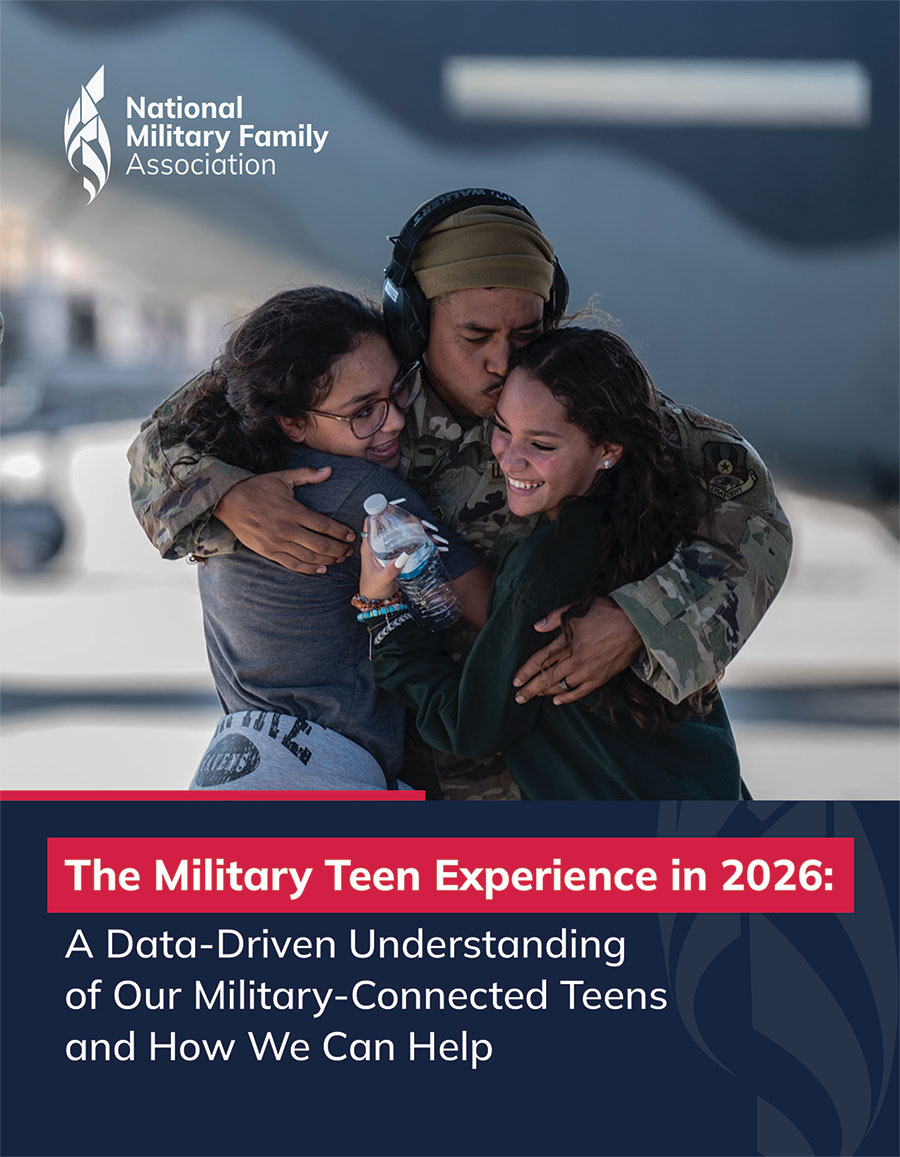
Download the Full Report [PDF]
Mental Well-Being
It’s a step. It isn’t the finish line.
More deployments, more moves, and more schools attended because of relocation were each linked to lower mental well-being. A military teen’s mental health is shaped, in part, by decisions made far above their pay grade.
Key Stats
- 70%
of respondents reported moderate mental well-being
- 22%
of respondents reported low mental well-being
- 9%
If you or someone you know is struggling, the 988 Suicide & Crisis Lifeline is available 24/7 by call or text. Service members, veterans, and their families: dial 988, then press 1, for the Veterans Crisis Line.
Why We Looked Closer This Year
Last year we learned how many teens were hurting. This year we asked why.
Numbers tell us the size of a problem. They do not tell us its shape. This year, we added a validated measure that asks not whether a young person self-harms, but what purpose the behavior serves.
The findings point toward a clear path for action. Among teens who reported self-harm, the most common reason, cited by roughly four in five respondents, was affect regulation: using self-harm to manage emotional pain. This was not primarily an act of defiance or a bid for attention. It was a coping strategy used when healthier alternatives were not available or accessible.
That distinction changes how we respond.
Key Stats
In the past six months:
of respondents reported thoughts of self-harm
– AND –
reported harming themselves at least once

When Kids Go Quiet
It’s Not About Distrust – Understanding the Communication Gap
Many military teens told us the adults in their lives understand what they’re carrying. Others told us something harder to hear: that they’re holding back to protect their parents from worry, not because they didn’t trust them.
What helps: Listen before trying to solve the problem. The most honest conversations happen in a car, on a walk, or side by side watching TV, almost never during a formal sit-down talk.
Sharing your own experience with stress can make struggling feel less shameful. And because a teen may not be ready to open up the first time, the message that matters most is often the quiet one, repeated consistently over time.
“I’m still here, and I’m listening.”
Resilience isn’t automatic. Our teens are working hard to build it.
Peer Connections
The Friend Who Just Gets It
Friendship is one of the strongest protective factors for military teen mental health — and our teens told us why in their own words.
Being a teenager is hard. Being a military teenager is harder — not because of a single dramatic event, but because military life raises the temperature on everyday adolescent stress. Connection is the counterweight.
Research is consistent: having just one caring adult outside the home, such as a coach, teacher, or youth pastor, can change the trajectory of a teen’s life, even if that adult is only part of their world for 18 months before the next PCS.
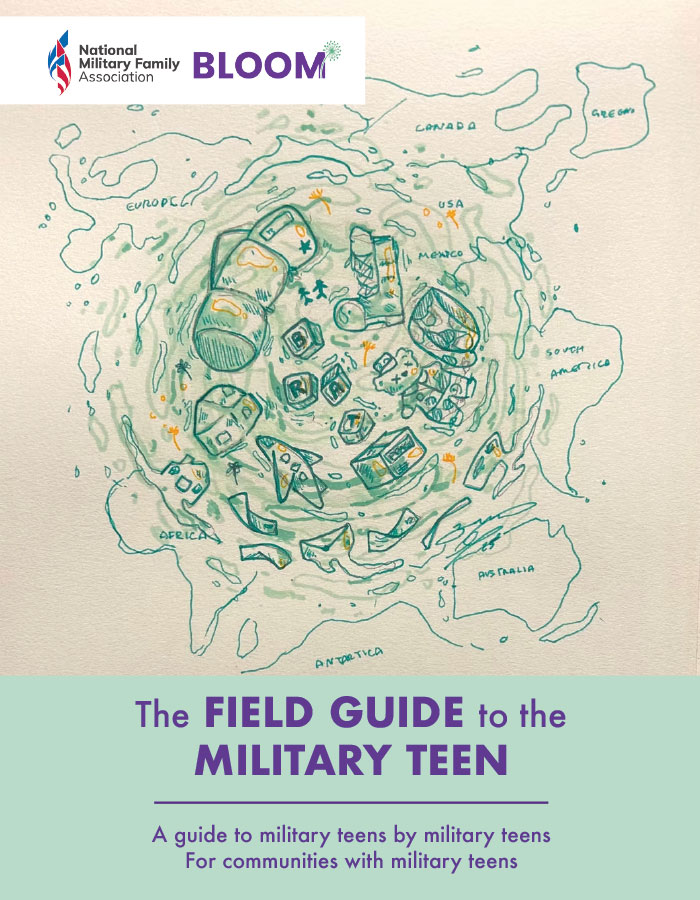
NMFA's Field Guide to the Military Teen
Food Security
34% of military teens didn’t have enough food last month. Here’s what that costs.
Food insecurity isn’t a standalone problem.
Key Stat
%
of military teen respondents experienced some level of food insecurity in the past month, nearly double the rate reported for military families overall.
It’s the visible edge of financial strain across a whole household. When budgets tighten, food is one of the few expenses a family can flex. Rent and the electric bill cannot.
What gets cut first is often exactly what a growing body needs most. Fresh produce, dairy, and lean protein are among the most expensive items in the grocery cart. In practice, that can mean one fewer egg, one fewer glass of milk, or one fewer serving of chicken. Those small reductions, repeated across a month and over the course of years, while a body is building bone and muscle and a brain is still developing.
That’s a readiness issue.
More than a third of these teens plan to serve in uniform themselves. Today, roughly seven in ten young Americans are ineligible for military service. The protein a military teen goes without today is the muscle the future force will need.
Half our teens live with a parent’s service-connected injury. Most started helping before anyone named it.
52% of respondents have at least one parent with a service-connected wound, illness, or injury—visible, invisible, or both.
Many of these teens carry caregiving responsibilities that go unnoticed: managing medications, steadying a parent through a hard night, watching younger siblings, learning to read the emotional weather of a home changed by war.
Much of it starts before there’s a diagnosis. Before there is a veteran with a name for what’s wrong, there is a family living through the uncertainty of trying to understand it. In that long stretch of wondering, Is something wrong?, a child is often already doing a caregiver’s work, without the language to understand what they’re carrying or the tools to carry it well while they’re still growing themselves. By the time a diagnosis arrives, the child has already been living the reality it describes.
Understanding the load Hidden Helpers carry is the first step toward making sure they don’t carry it alone.
Key Stats
Teens with a wounded, ill, or injured parent were
more likely to experience thoughts of self-harm
– AND –
more likely to engage in self-harm behavior.
Already Serving
Military teens are balancing what most people don’t juggle until much later: financial worry, part-time work, caregiving, and planning for a future that often includes service of their own.
The decision isn’t driven by obligation. It’s rooted in admiration. These teens watched a parent take on something meaningful and challenging, and they want to follow.
Key Stats
- 34%
plan to serve in the military
- 76%
name pride in watching a parent serve among their top two reasons to serve
- 11%
state family expectations as the reason they plan to serve
Nearly one-third worry about their family’s finances. Many who work aren’t earning spending money; they’re helping their families make ends meet. For these teens, a job isn’t a rite of passage. It’s a contribution to their family, their community, and the broader economy.
Some work because they want to. Some because they need to. Either way, they’re already giving something back.
They’re already serving long before any decision about wearing a uniform.
They’re Not Just Getting By.
Military teens carry more than most people realize.
What this report shows year after year is that strength like theirs isn’t issued. It’s built, and it’s built by people. Family. Friends. The coach, the teacher, the neighbor who stayed a little longer.
These young people have already developed, through experience, the very qualities we say we want in leaders: adaptability, responsibility, empathy, and grit. The question isn’t whether military teens are capable of remarkable things. They are, and they’re already proving it.
The question is whether the rest of us will meet them with the support, opportunity, and belief they need to become everything their experiences have prepared them to be.
That’s the work the National Military Family Association has done every day since five women sat around a kitchen table and began building what would become NMFA.
Download the Full Report [PDF]
The Military Teen Experience Survey is a mixed-method, cross-sectional study designed to examine the experiences of military-connected adolescents and young adults.
Read the Field Guide