

The MOLD Act Needs Your Support: Take Action Now
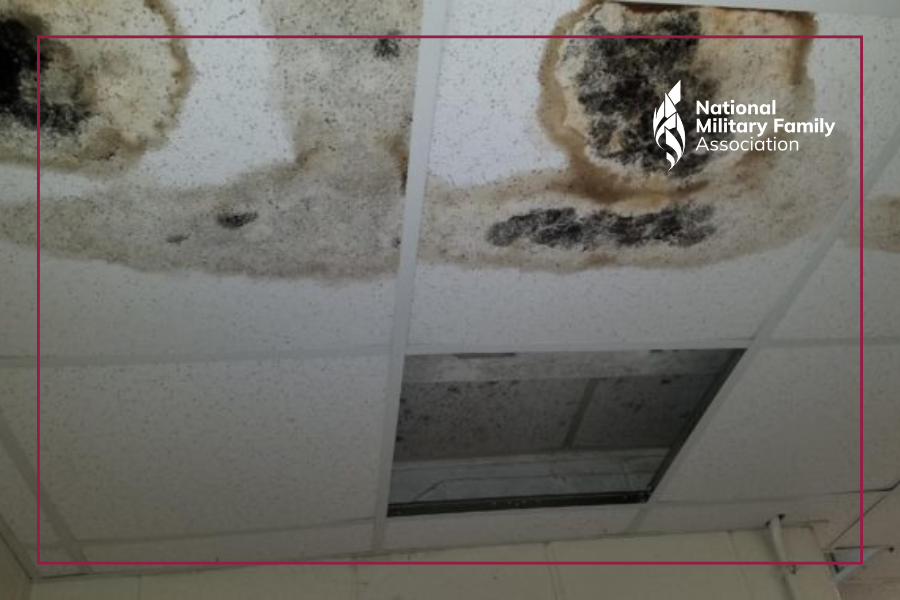
Home should be the one place military families don’t have to worry. Yet for many families living in privatized housing, health and safety concerns have made that nearly impossible.
Military families across the country have reported mold contamination, excessive moisture, poor ventilation, and other hazardous living conditions in their homes. Many have spent months submitting maintenance requests, documenting problems, seeking medical care, and fighting for answers while continuing to live in homes they believe are affecting their health.
The Military Occupancy Living Defense (MOLD) Act was introduced to help address these challenges. The legislation would establish stronger health and safety standards, increase transparency, and create greater accountability when housing conditions put military families at risk.
The bill is also approaching a critical moment in Congress, making now an important time for military families to speak up.
What Is the MOLD Act?
The MOLD Act (H.R. 7188/S. 3654) is bipartisan legislation aimed at improving health and safety protections in privatized military housing.
At its core, the bill is about ensuring military families have access to safe homes and reliable information when concerns arise. It would establish clearer standards for identifying and addressing mold and other environmental hazards while creating stronger oversight of housing providers.
For families who have struggled to get answers about conditions in their homes, the MOLD Act would create more consistent processes and greater transparency.
Why Does It Matter?
Unsafe housing conditions can have serious consequences for military families.
Exposure to mold and excessive moisture has been linked to respiratory illnesses, neurological symptoms, chronic health concerns, and developmental risks for children. Families dealing with these issues often face difficult choices while waiting for repairs, including whether to remain in the home or pay out of pocket for alternative housing.
Many families have also reported difficulty obtaining inspections, understanding the extent of contamination, or accessing records that might help explain ongoing health concerns.
These families shouldn’t be forced to spend months advocating for safe living conditions in their own homes. The MOLD Act seeks to provide clearer protections and stronger accountability when problems arise.
What Would the MOLD Act Do?
The legislation includes several important protections for military families.
First, it would establish clear standards for mold contamination and humidity levels in privatized housing. Those standards would help determine when conditions require action and make sure concerns are evaluated consistently.
The bill would also require independent third-party inspections performed by contractors who are not affiliated with military housing companies.
Inspections would be required:
- Upon every tenant turnover of a housing unit.
- Upon receipt of any tenant complaint regarding safety and habitability of a housing unit.
- Following any remediation effort, structural repair, or response to an identified environmental hazard at a housing unit.
The legislation would also increase transparency by requiring maintenance records, inspection findings, and contamination reports to be documented and accessible to families and their healthcare providers.
Additionally, families would be able to access inspection records from the previous seven years, helping them better understand a home’s history and identify potential patterns of concern.
Where Does the MOLD Act Stand Now?
The MOLD Act recently cleared an important hurdle when it was included in the version of the National Defense Authorization Act (NDAA) approved by the Senate Armed Services Committee.
However, the House Armed Services Committee did not include the legislation in its version of the NDAA.
There is still an opportunity for the bill to move forward.
The House is expected to consider the NDAA during the week of June 29, making the coming days especially important.
The MOLD Act is slated to be introduced as an amendment when the NDAA reaches the House floor for debate and a vote. If adopted, the amendment would add these protections back into the legislation.
Why Your Voice Matters
Congress needs to hear from YOU.
Whether you’ve experienced unsafe housing conditions yourself, know someone who has, or simply believe military families deserve to live in safe homes, your voice can help demonstrate why this legislation matters.
For years, military families have shared stories about health concerns, financial burdens, damaged property, all while trying to get their housing problems solved. Those stories helped bring attention to these issues, and now Congress has an opportunity to do something about them.
Take Action Today
The House is expected to vote on the NDAA next week. Before that happens, military families, veterans, and the public can help build support for the MOLD Act by contacting their representatives in Congress.
Through our Military Family Action Center, you can send a pre-drafted message urging your members of Congress to support and pass the MOLD Act when it makes its way to the House floor next week.
Safe housing should never be a question mark for military families. Help us urge Congress to pass the MOLD Act and strengthen protections for those who serve and the families who serve alongside them.
SHARE YOUR STORY
CATEGORIES:
TAGS: