

We Asked. You Answered: What Military Spouses Want the New Commission to Address
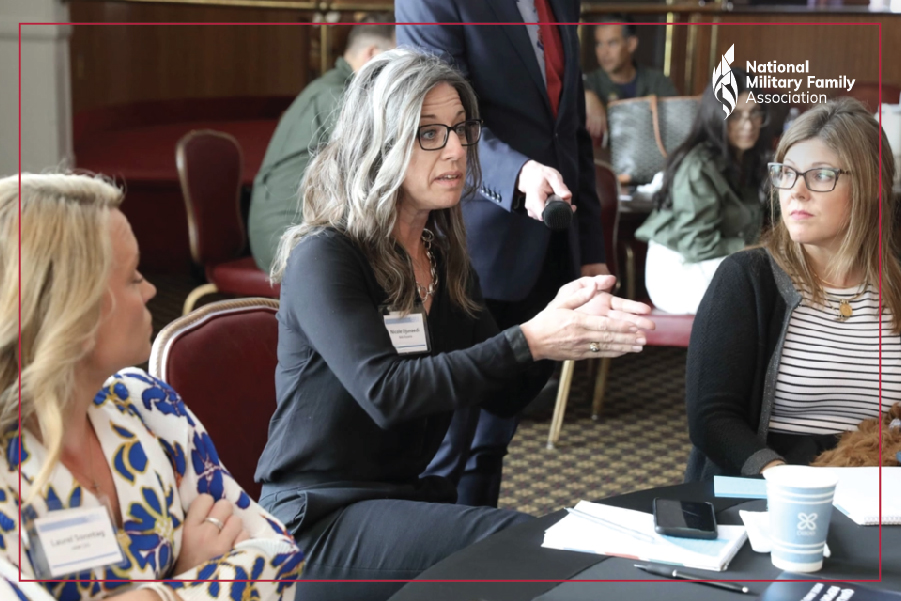
What topics, challenges, or opportunities do you believe should be on the Military Spouse Commission’s agenda?
That’s the question NMFA recently posed to our community following the creation of the President’s Military Spouse Commission.
Established by Executive Order, the Commission is tasked with examining the challenges facing military spouses and identifying opportunities to strengthen their quality of life. For NMFA, the announcement also presented an important opportunity to ask military spouses directly what they believe deserves a place in that conversation.
And you had a lot to say.
The responses we received are anecdotal. They aren’t scientific survey results, and they aren’t intended to represent every military spouse or family experience. But they do provide a snapshot of what military spouses are thinking about right now. More importantly, they come directly from people living military life every day.
Your experiences matter. Your words matter. And there were some clear themes in what you told us.
Employment Was Front and Center
By far, one of the most common topics raised was military spouse employment and career continuity.
Spouses talked about losing jobs with every PCS, difficulty navigating the federal hiring process, limited remote work opportunities, professional licenses that don’t easily transfer between states, and career gaps that compound over years of military service.
One spouse summed up the frustration of repeatedly rebuilding a career after a move: “I didn’t [earn] two master’s and multiple credentials/certifications to have to downgrade just to get a job at every PCS location.”
But the conversation went beyond finding the next job.
Many spouses pointed to the long-term financial consequences of military life, including lost wages, missed employer retirement contributions, and retirement plans they never remain in one place long enough to fully vest in.
For many families, spouse employment isn’t simply a career issue, but a financial security issue that can follow spouses long after their service member hangs up their uniform.
Health Care Remains a Major Concern
TRICARE and access to health care also generated significant discussion.
Spouses raised concerns about finding providers who accept TRICARE, long waits for appointments and referrals, access to specialty care, fertility and women’s health coverage, and challenges receiving care in rural or remote duty locations.
But one issue came up repeatedly: TRICARE coverage for military-connected young adults through age 26. Spouses questioned why their young adults don’t have access to the same coverage timeline commonly available to their civilian peers.
As one military parent put it, “We are not asking for anything special. We are only asking for what other families get.” The parent went on to describe how the current system can force young adults to make decisions about jobs, education, and even entrepreneurship based on their need for health insurance.
This is an issue NMFA has been working extensively on for years, advocating to ensure military-connected young adults have access to the same health care protections as their civilian peers.
PCS Moves Touch Almost Everything
Military spouses also made clear that PCS moves create challenges far beyond packing boxes.
You talked about housing costs and BAH, delayed reimbursements, unpredictable orders, childcare waitlists, disrupted careers, and the difficulty military children face transferring between schools with different requirements and curricula.
One spouse called for “predictable and cyclical PCSing that gives us more than just two or three months to plan,” capturing how even a little more certainty could give families valuable time to prepare for everything a move sets in motion.
Some spouses also called for more opportunities to remain in one location longer, particularly when EFMP needs, or other family circumstances, make another move especially disruptive.
Others asked for stronger accountability when existing protections and programs don’t work as intended.
Community and Representation Matter, Too
Not every concern was financial or logistical.
Several spouses described feeling increasingly isolated and said the sense of community they expected to find in military life simply wasn’t there.
“I have never felt so alone,” one spouse shared after several years and multiple duty stations. “Living this life without a support system is unsustainable.”
That feeling was echoed by Reserve and National Guard spouses, who spoke about being caught between military and civilian communities. Others emphasized the importance of ensuring junior enlisted spouses, dual-military couples, surviving spouses, and other military spouses across different branches, ranks, and genders all have a voice in conversations about military spouse policy.
There was also a clear desire to make sure the Military Spouse Commission remains focused on military spouses themselves, including their careers, financial futures, health, and well-being.
Other Issues Mentioned, But No Less Important
Several concerns appeared less frequently in this particular thread but still deserve attention; many of which NMFA is actively working on, including: military housing conditions, caregiver support, mental health resources, military child education, and access to affordable childcare, to name a few.
The issues may have varied, but a common thread ran through many of the responses: military spouses want accountability when existing systems fall short and are looking for lasting, structural policy changes – not temporary programs or one-time initiatives that can’t be sustained.
One simple question on social media can’t capture the full military spouse experience. But it can start a meaningful conversation.
And we’re listening.
As the Military Spouse Commission begins its work, NMFA will continue to do what we’ve been doing for the last 57 years: listening to military families, elevating their experiences, and advocating for policies that make military life better.
Because all military spouses and their families deserve to be heard.
SHARE YOUR STORY
CATEGORIES:
TAGS: