

NMFA and Buffett Early Childhood Institute Bring Child Care Solutions to Capitol Hill
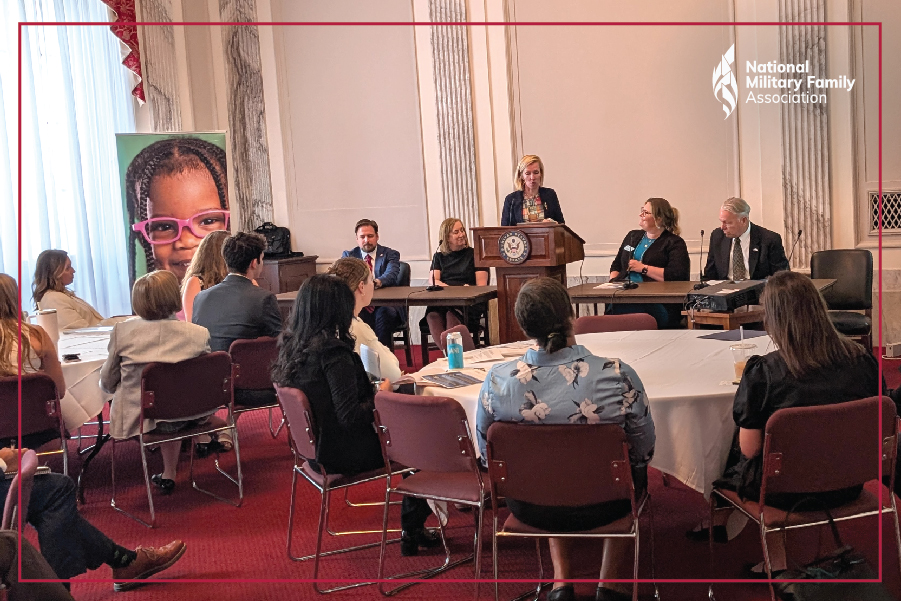
Military family advocates, researchers, policymakers, and child care leaders gathered on Capitol Hill as NMFA and the Buffett Early Childhood Institute (BECI) partnered to host a congressional briefing on one of the most pressing issues facing military families: access to high-quality, affordable child care. The event brought together new research, military family perspectives, and innovative solutions to strengthen military family readiness by addressing child care challenges.
In her opening, NMFA CEO Besa Pinchotti emphasized that child care is far more than a family concern: it’s a national security issue.
More than 70% of children in active-duty military families are under the age of 12, with the largest group being age five and younger. Frequent moves, deployments, PCS moves, and limited child care availability create challenges that many civilian families never experience.
The briefing featured a presentation from Dr. Walter Gilliam of the Buffett Early Childhood Institute, who shared findings from BECI’s CARES research examining the early childhood workforce and the barriers families face in accessing quality care. The data underscored what military families have long reported: child care shortages create significant financial, emotional, and career impacts for parents while also affecting their children’s well-being.
Following the presentation, Pinchotti sat down with military spouse Sabrina Dalton for a fireside conversation about navigating child care throughout military life. Dalton shared the realities of piecing together reliable care through multiple PCS moves and changing military assignments, illustrating how the data presented reflects the lived experiences of countless military families.
The discussion then shifted toward solutions during a panel featuring representatives from NMFA, BECI, the Department of War, and the Armed Services YMCA. Panelists explored opportunities to expand child care capacity while strengthening the early childhood workforce.
Among the topics discussed were creating portable credentials for child care professionals, developing stronger career pathways for early childhood educators, and increasing culturally competent care that recognizes the unique experiences of military-connected children. Panelists also examined public-private partnerships that are expanding access to child care in high-demand military communities and workforce initiatives that help military spouses build careers in early childhood education.
The conversation also addressed the need for child care options that better reflect the realities of military life. Traditional nine-to-five schedules often don’t meet the needs of military families, particularly those balancing deployments, training schedules, shift work, or healthcare careers, such as nursing. Flexible child care options and policies that support nontraditional work hours remain critical components of any long-term solution.
Throughout the briefing, speakers reinforced that solving the military child care crisis requires collaboration across government, nonprofit organizations, researchers, and community partners. While the challenges are significant, the event highlighted practical ideas already showing promise, including workforce development, credentialing reform, community-based child care centers, and expanded public-private partnerships.
For NMFA, the partnership with BECI represents a shared commitment to pairing research with advocacy to improve outcomes for military families.
By combining data, lived experience, and innovative policy discussions, this congressional briefing demonstrated that meaningful progress is possible when organizations work together to address the military community’s most persistent challenges.
Together We’re Stronger®
SHARE YOUR STORY
CATEGORIES:
TAGS: