

BE THE FIRST TO KNOW
Find out about camps, scholarships, child care, family events, our advocacy work, and more.
BE THE FIRST TO KNOW
Find out about camps, scholarships, child care, family events, our advocacy work, and more.
Leave Options for Military Families
BE THE FIRST TO KNOW
Find out about camps, scholarships, child care, family events, our advocacy work, and more.
When Life Happens
Life happens. We hear it all the time in military and civilian households alike. But what does a military family do when life happens all at once, such as an upcoming deployment, medical needs, kids in school, or an unexpected homecoming?
When these moments arise, taking time off work may be necessary to manage family responsibilities and provide needed support.
Programs like Paid Family Leave and the Family and Medical Leave Act (FMLA) may provide options for eligible workers who need time away from their jobs during major life events. Learn more about these leave options and see whether you may qualify.

Quick Overview: FMLA vs Paid Family Leave
| Program | Paid? | Who Provides It | Who It Helps |
| FMLA | Unpaid | Federal law | Workers needing protected leave |
| Paid Family Leave | Paid | State programs | Workers who qualify for state benefits |
Family and Medical Leave Act (FMLA)
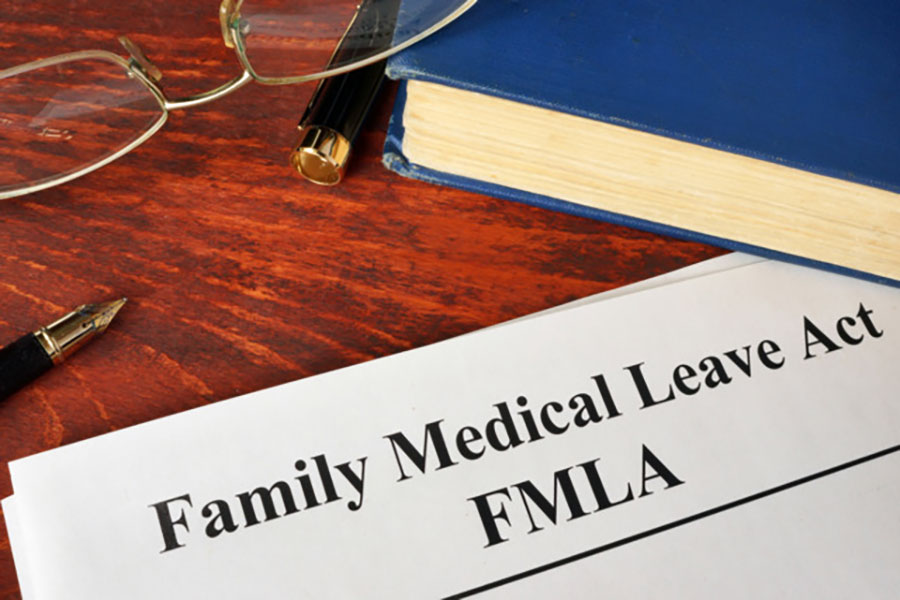
The Family and Medical Leave Act (FMLA) was passed in January 1993 and signed by President Clinton. It’s a federal benefit giving eligible workers up to 12 weeks of unpaid, job-protected leave while they take time away from work to:
- Care for a sick family member
- Care for a newborn, newly-adopted child, or newly-placed foster child
- Address a serious health condition, including pregnancy
How Do I Qualify for FMLA?
- Work for a qualified employer who has more than 50 employees within a 75-mile radius
- Have worked 1250 hours in a year
Military service members are not eligible; however, National Guard and Reservists may meet eligibility criteria if employed in addition to their military service.
FMLA for Military Families
The original version of the FMLA didn’t include any provisions for military families, however, the bill was expanded in the National Defense Authorization Act, and would encompass all branches of the military and components of the armed forces.
These expansions allowed military family members (including a parent, spouse, or sibling) to take unpaid, job-protected leave to:
- Care for a wounded, ill, or injured service member for up to 24 workweeks in a 12-month period
- Address qualifying contingencies arising from a deployment, such as:
- Preparing legal documents or addressing financial issues BEFORE a deployment. This includes Power of Attorney, wills, financial preparedness classes
- Finding childcare BEFORE a deployment
- Attending school events for a child or dependent
- Attending pre- or post-deployment briefs
- Attending a military member’s send-off or homecoming
BE THE FIRST TO KNOW
Find out about camps, scholarships, child care, family events, our advocacy work, and more.
BE THE FIRST TO KNOW
Find out about camps, scholarships, child care, family events, our advocacy work, and more.
BE THE FIRST TO KNOW
Find out about camps, scholarships, child care, family events, our advocacy work, and more.
BE THE FIRST TO KNOW
Find out about camps, scholarships, child care, family events, our advocacy work, and more.
Paid Family Leave
Paid Family Leave is a state-led initiative providing eligible workers paid, job-protected time off to address some of the same contingencies as FMLA. Employees are able to maintain an income if they’re out of work for an extended period of time to:
- Care for a sick family member
- Care for a newborn, newly-adopted child, or newly-placed foster child
- Address a serious health condition, including pregnancy
Paid Family Leave is set up by a state’s unemployment benefit compensation fund and is typically paid into by both the employer and employee in the state where the employer is located, though this can differ by state.

How do I Qualify for Paid Family Leave?
Eligibility for Paid Family Leave varies from state to state. Some must have a minimum number of employees on staff before they’ll fund Paid Family Leave; others require employees to work a certain number of hours per year to qualify.
Military service members are not eligible; however, National Guard and Reservists may meet eligibility criteria if employed in addition to their military service.
Check the National Partnership for Women & Families Paid Leave Tracker to see if your state’s eligibility requirements.
There are a few sources from which you can receive Paid Family Leave funds:
From Your Employer:
Some employers have their own Paid Family Leave policies. Companies that voluntarily provide Paid Family Leave have their own requirements and criteria. Check with your Human Resource Administrator to see if your employer offers Paid Family Leave.
From a Short or Long-Term Disability Insurer:
You can get this through your employer or on your own through a third-party insurer. Usually, you will pay the insurer a premium each month, and in the event of an extended absence, you’ll receive payment directly from the third-party insurer.
From Your State:
Only a handful of states have passed Paid Family Leave legislation, which mandates employers to offer Paid Family Leave under specific guidelines. Those guidelines can vary from one state to the next.

Paid Family Leave for Military Families
- Connecticut
- Massachusetts
- New York
- Washington
- California
- Care for a wounded, ill, or injured service member for up to 24 work weeks in a 12-month period
- Address qualifying contingencies arising from a deployment, such as:
- Preparing legal documents or addressing financial issues BEFORE a deployment. This includes Power of Attorney, wills, financial preparedness classes)
- Finding childcare BEFORE a deployment
- Attending school events for a child or dependent
- Attending pre- or post-deployment briefs
- Attending a military member’s deployment send-off or homecoming
- Find information about State Paid Family and Medical Leave Insurance Laws.
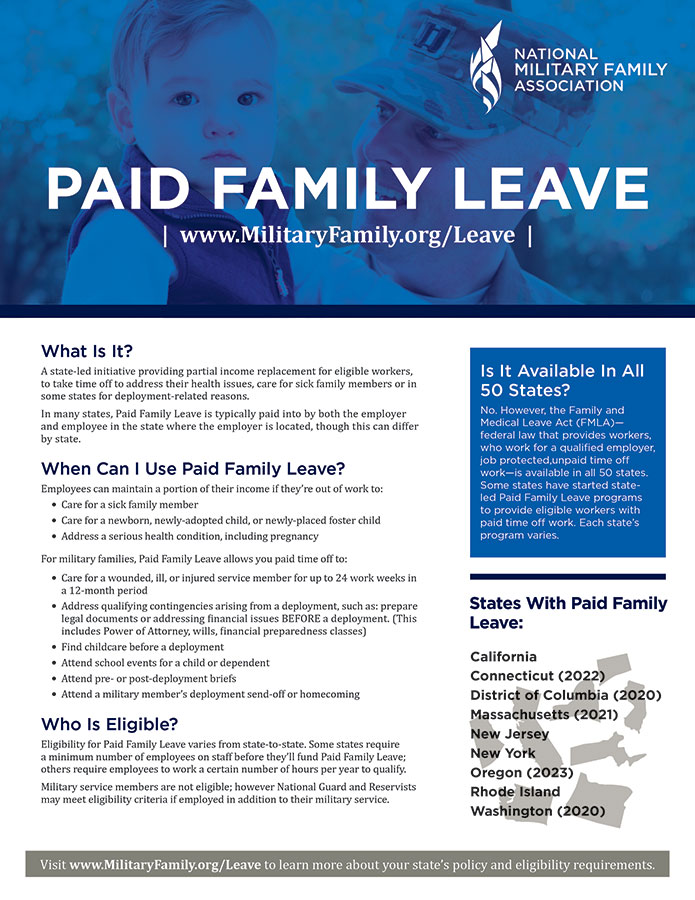
Get all the information you need about Paid Family Leave in a downloadable one-page fact sheet.
BE THE FIRST TO KNOW
Find out about camps, scholarships, child care, family events, our advocacy work, and more.
BE THE FIRST TO KNOW
Find out about camps, scholarships, child care, family events, our advocacy work, and more.

We Need Your Help More Than Ever