

Called to Care: When Nursing Meets Military Life
Nurses know how to adapt.
They make decisions under pressure, care for families during vulnerable moments, and step into unpredictable situations with skill and compassion. For military spouse nurses, that adaptability often extends far beyond the hospital.
Permanent Change of Station (PCS) moves, deployments, licensing requirements, unfamiliar communities, and shifting employment opportunities can repeatedly reshape a military spouse’s professional path. Yet military spouse nurses continue to build meaningful careers, develop expertise, and care for patients while navigating the demands of military life.
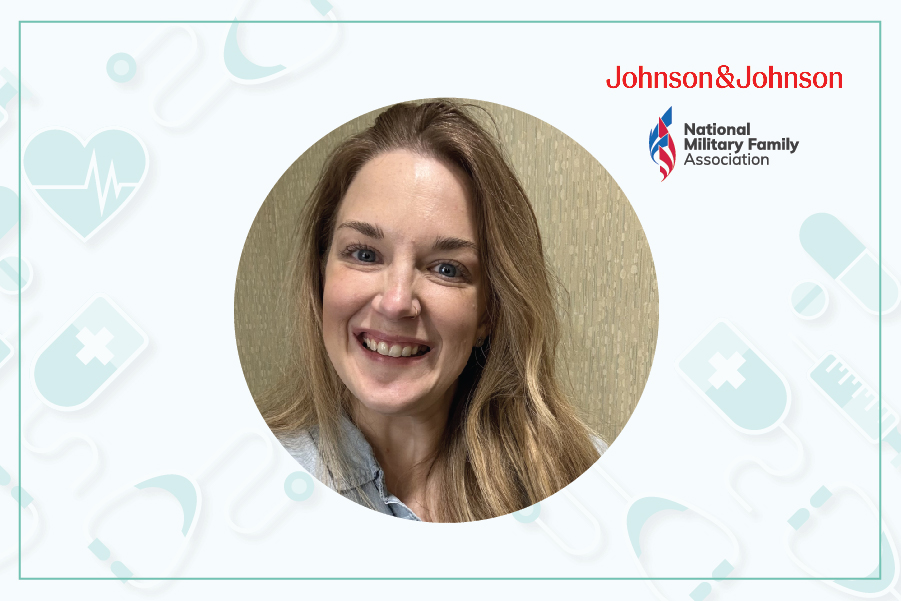
Virginia Abernathy knows that balance well.
An Army spouse of 15 years who has experienced seven PCS moves, Virginia is an experienced Labor and Delivery nurse certified in Inpatient Obstetrics. Her path into nursing began with a deeply personal experience: the loss of her father after a week in the intensive care unit while her husband was on assignment in South Korea. Watching the nurses care not only for her father but also for their family confirmed something Virginia had long felt: caring for others was the work she was meant to do.
A Career That Moves
Virginia began her nursing career after becoming a military spouse, and military life shaped her professional journey almost immediately.
A PCS required her to transfer nursing programs and repeat her first two semesters. She ultimately earned both her associate and bachelor’s degrees, using her husband’s GI Bill benefits to help continue her education.
Early in her career, moving was somewhat easier because she had not yet settled into a specialty. Today, Virginia has found her professional home in Labor and Delivery.
That specialization represents years of experience and hard-earned expertise. It can also make each new duty station more complicated.
With every move, Virginia has to consider whether there will be a delivery unit nearby and whether that hospital will be hiring. At her current location, a hiring freeze at the nearby military hospital meant the opportunities available to her were more than 30 minutes away.
It is a challenge many military spouses encounter as their careers advance: the more specialized their skills become, the more difficult it can be to simply pick up that career and move it somewhere new.
The Challenges Beyond Licensure
Professional licensing is one of the most visible barriers facing military spouses in healthcare, but it is only one piece of a much larger employment picture.
Virginia has benefited from maintaining residency in a Nurse Licensure Compact state, which has made licensure relatively manageable. When she has needed an individual state license, however, there is still paperwork to gather, fees to pay, and another process to navigate.
Then comes everything that happens after the license is secured.
A military spouse nurse may need to find an opening in the right specialty, learn a new hospital system, rebuild a professional network, become familiar with local resources, and establish herself within a new team.
Meanwhile, military life remains unpredictable at home.
Virginia may think she knows her husband’s schedule for the coming weeks, only for him to receive an unexpected training assignment that takes him away for an extended period. Those changes can quickly affect household responsibilities, schedules, and a spouse’s ability to work.
These challenges are not always visible on a résumé, but they are part of what it takes to sustain a career alongside military service.
Experience That Deserves Recognition
Frequent moves can also affect something less frequently discussed: how professional experience is valued.
Virginia wishes more healthcare employers would consider a nurse’s overall experience rather than placing so much weight on tenure with a single organization.
“I don’t have the option!” she said of repeatedly changing employers.
Her point gets to the heart of a broader workforce issue.
A military spouse nurse may arrive at a new hospital as its newest employee, bringing years of clinical expertise. A résumé spanning several organizations does not necessarily signal a lack of commitment. For military spouses, it may instead tell the story of a career repeatedly rebuilt around the needs of military service.
And that experience brings value.
Virginia says military spouses can “roll with the unpredictable like no other.” Living in different regions has also helped her connect with patients and families whose experiences and backgrounds may be very different from her own.
Adaptability, cultural awareness, resilience, and the ability to build trust quickly are not simply strengths developed through military life. They are strengths that matter in nursing.
Celebrating the Wins
The story of military spouse employment should never be told only through its barriers.
It is also a story of degrees completed, licenses earned, expertise developed, patients cared for, and careers sustained through years of change.
For Virginia, earning her RNC-OB certification remains one of her proudest professional accomplishments. The credential helped quiet her imposter syndrome and affirmed the expertise she had worked hard to build.
Her advice to her younger self reflects the perspective that comes from building a career across military life: there will always be time to learn and do more. A military spouse does not have to fit every opportunity into the few years spent with one organization. There may be opportunities waiting at the next duty station, too.
Virginia’s story is one of many.
Across the military community, spouse nurses are building careers, earning credentials, caring for patients, and bringing their skills to communities across the country. Every move may change where they work, but it does not erase the experience, compassion, and expertise they carry with them.
At the National Military Family Association, we want to celebrate those stories. By sharing the experiences of military spouse nurses, we can highlight not only the challenges they navigate, but also the talent, dedication, and impact they bring to the healthcare workforce every day.
Are you a military spouse nurse? We want to hear from you. Share your story here.
Together We’re Stronger®
By: Olivia Brinsfield, Content Manager
SHARE YOUR STORY
CATEGORIES:
TAGS: