

“I Will Always Be a Nurse”: How Breanna Balances Nursing and Military Life
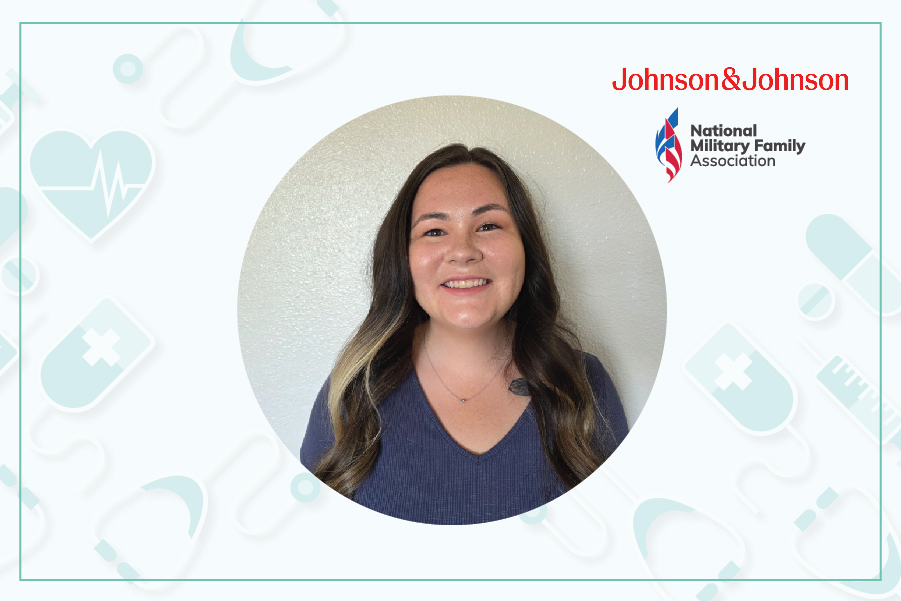
Becoming a nurse took Breanna years of persistence. Military life has repeatedly changed where she lives, where she works, and what opportunities have been available to her. It has never changed why she became a nurse in the first place.
“I will always be a nurse, and I will always help people,” she said. “It’s just who I am.”
For Breanna, 29, that sense of purpose began long before she became a military spouse. After watching her sister tear multiple ligaments in her knee during a softball game, she remembers feeling helpless as someone she loved was in pain. The experience stayed with her and ultimately drew her toward nursing.
She began completing her nursing prerequisites before meeting her husband, an active-duty Navy service member. They became engaged during her first semester of nursing school, and from then on, Breanna pursued two demanding paths at once: becoming a nurse and building a life within the military.
Becoming a Nurse, One Step at a Time
Breanna completed a Licensed Practical Nurse to Registered Nurse pathway, a process prolonged by COVID-19 disruptions and program waitlists. There were times when she wondered whether she would reach the career she had imagined.
“Just becoming a nurse in the first place was so meaningful to me,” she said. “I never thought I was going to get to a place where I am now, comfortable with the work that I do and not feeling like an imposter.”
After finishing nursing school in Arizona, Breanna moved with her husband to California. Although military spouse status helped expedite her license, finding employment remained difficult. She eventually secured a coveted position for a new graduate and worked there for nearly two years.
Then Breanna had her son, and her husband deployed.
With the demands of nursing, parenting, and deployment colliding, Breanna left her job to care for her family. When she was ready to return, she submitted more than 100 applications over six months before finding a position she loved.
Her experience reveals a reality that is easy to miss. A military spouse nurse can be qualified, experienced, and eager to work, yet still struggle within a health care system that rewards uninterrupted employment and schedule flexibility.
The Cost of Starting Over
Breanna and her husband have completed one move and are preparing for another. With each transition comes the possibility of another license, another job search, and another climb from the bottom of a workplace hierarchy.
Leaving a position can mean losing seniority. Working reduced hours may limit access to advanced responsibilities. Moving before meeting time-based requirements can close the door to a desired specialty. Even when a nurse quickly finds another job, a new position does not restore the professional ground that was lost.
“Every time we move, or things like deployment and having to put my family first cause me to quit my job, it sets me back,” Breanna explained. “I no longer get the seniority, I can’t advance into more skilled or time-based positions, and because I’m working fewer hours to be with my family, I am overlooked.”
Breanna hopes to specialize in intensive care or emergency nursing. In her current health care system, reaching those departments generally requires at least one year of full-time night shifts. For a mother whose spouse may be deployed, that requirement can make advancement functionally inaccessible.
The challenge is not Breanna’s willingness to work hard. It is that the traditional path to advancement assumes a level of predictability military families often do not have.
What It Means to Dial Back
The sacrifice is not always leaving a career altogether. Sometimes it means declining an advancement opportunity, working fewer hours, postponing a specialty, or accepting that experience will not translate into seniority at the next duty station.
“There have been more times than not that I have had to dial back on seeking advancing positions so that I can make sure my husband and family are taken care of,” Breanna said.
She does not speak about those choices with regret. Nursing remains deeply fulfilling to her, regardless of whether her career is following the fastest route forward.
“Any amount of work as a nurse is enough to fulfill me and fill my cup,” she said.
Still, being at peace with a sacrifice does not mean the sacrifice should remain invisible.
Military spouse nurses care for patients while navigating deployments, childcare constraints, relocations, and employment systems that may treat every interruption as lost momentum. Their families need flexibility from them, while their profession often demands continuity.
What Military Spouses Bring with Them
Military life has also strengthened what Breanna brings to her patients and colleagues. Military spouses learn to adjust when plans change, solve unfamiliar problems, and find their footing in new communities.
“We bring the ability to pivot in any situation because we’re used to doing that as military spouses,” she said.
They also carry knowledge across state lines and health care systems. Yet those moves expose how dramatically nursing conditions can differ. Some states participate in interstate licensing compacts, while others do not. California mandates nurse-to-patient ratios; a protection that makes Breanna’s work safer. A future move could take her to a state without comparable standards.
Breanna wishes hospital systems, licensing boards, and policymakers understood that maintaining a health care career within military life is not a one-size-fits-all experience. Greater consistency could make transitions more manageable for military spouses and other nurses alike.
Advice to Her Younger Self
Breanna would tell her younger self that it is okay for her career to remain on the back burner for a season. The ICU or emergency department will still be there when the timing is right.
In the meantime, she is gathering experience, carrying lessons from one workplace to another, and helping the next generation of nurses begin their careers. She is also learning that dialing back during a deployment is not the same as giving up.
Breanna’s path may not have been linear, but it has never taken her away from the reason she began.
“I’ll never fully give it up,” she said. “Balance will come at the most surprising time, and you just have to take it.”
If you are a military spouse nurse navigating licensure, moves, deployments, parenthood, or career advancement, we want to hear from you. Share your story with NMFA and help others better understand both the challenges military spouse nurses face and the value they bring to the patients and communities they serve.
Together We’re Stronger ®
By: Olivia Brinsfield, Content Manager
SHARE YOUR STORY
CATEGORIES:
TAGS: